 Charlotte Criminal Lawyer Blog


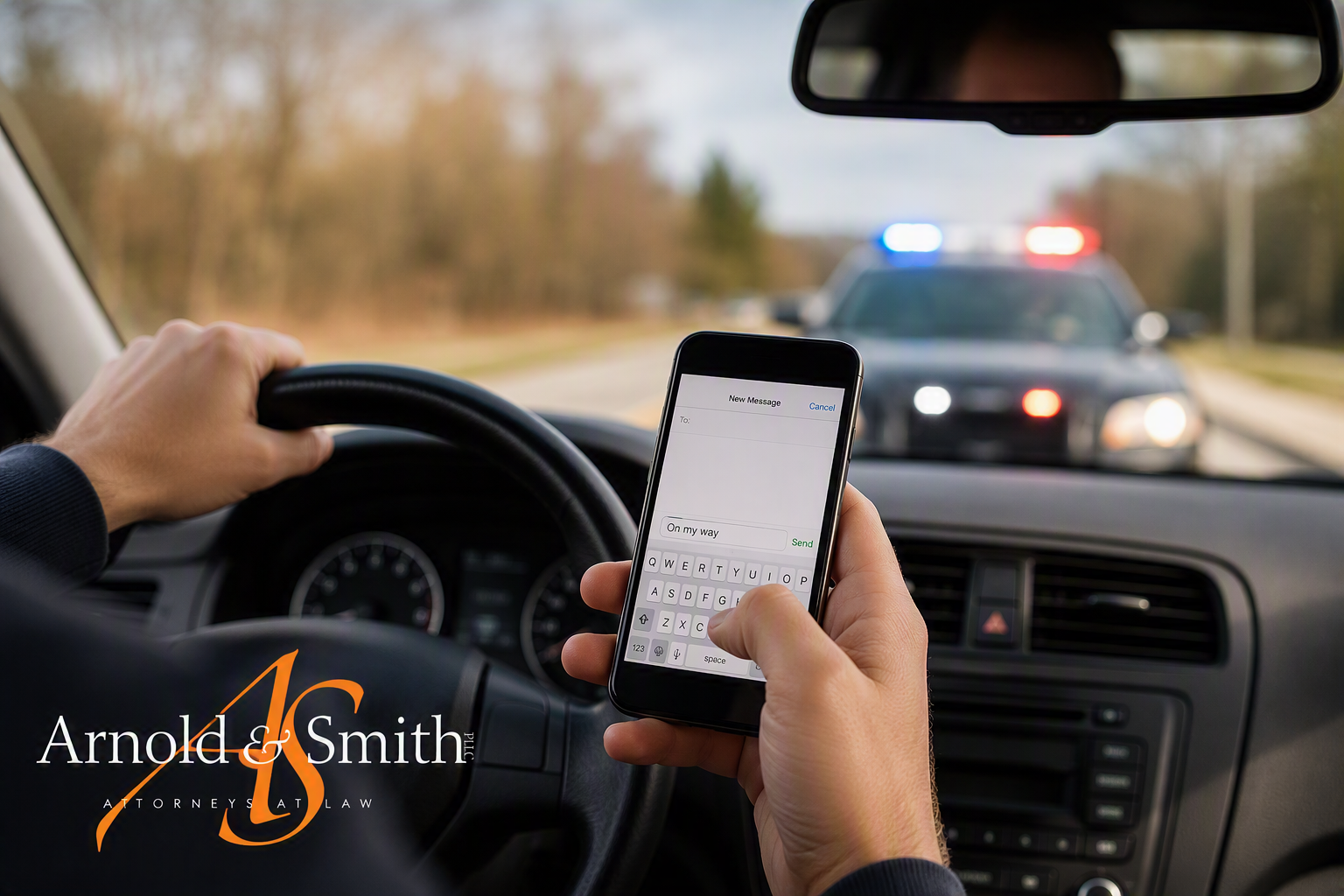 Cell phones are the major form of communication for most people. The use of cell phones has steadily risen over the last twenty years. While using a cell phone has become commonplace, the use of cell phones in some circumstances is restricted. The use of a cell phone for texting or emailing while driving is against the law in North Carolina. If you are caught texting while behind the wheel, you could receive a citation.
North Carolina Texting While Driving Law
North Carolina law bans texting while driving. Under the law, drivers are prohibited from reading or writing text messages or emails as well as using the Internet while driving. The law applies while operating a motor vehicle, whether it is moving or stopped, while on a public road or highway. This means that you are not allowed to text, even while you are at a red light. Drivers are allowed to operate a cell phone or GPS device in handsfree mode.
Texting is a Primary Offense
North Carolina law makes texting a primary offense. That means that a member of law enforcement is allowed to stop you specifically for texting while driving. In these types of cases, the police officer generally must have observed you on your phone. You could also be given a ticket for texting while driving if you have been stopped for a different offense. Those under the age of 18 are prohibited from all types of cell phone use while driving.
Can The Police Get My Cell Phone Records?
Law enforcement is allowed to request a subpoena to prove that a driver was texting while driving. However, in practice, police don’t typically go through that effort unless there was a major accident or injuries as a result of a crash due to suspected texting while driving. It is important to note that cell phone companies protect the privacy of their customers and will not turn over reports or information unless they receive a signed warrant or subpoena requiring them to do so.
Penalties for Texting While Driving
The penalty for texting while driving is a fine of $100 plus court costs. There are currently no points assessed against your license, nor does the infraction trigger insurance premium increases. The law provides special penalties for drivers who are under the age of 18 or school bus drivers. Minors will pay a fee of $25. Texting while driving is a criminal offense for school bus drivers and results in a Class 2 misdemeanor and fines of at least $100. Commercial truck drivers face federal penalties. If texting results in a serious accident with injuries, the driver could face criminal charges that may result in penalties that may include a jail sentence.
Defending Texting While Driving Charges
If you wish to contest a ticket for texting while driving, you can go to court. A school bus driver, commercial driver, or those who were involved in accidents may be required to attend court. An experienced attorney will review the details of the case and help provide your defense in front of a judge. Call us today at Arnold & Smith, PLLC, at (704) 370-2828 to request a consultation to discuss the details of your case and determine your options.

The criminal defense attorneys at Arnold & Smith, PLLC represent individuals facing a wide range of state and federal criminal charges. Our practice includes traffic violations, DWI/DUI offenses, drug crimes, firearm and weapons charges, and gun permit denials.
We also defend clients accused of property crimes, including larceny, breaking and entering, robbery, fraud, embezzlement, and other white-collar offenses. Our attorneys handle cases involving sex-related offenses, such as indecent exposure, sexual assault, crimes against nature, and petitions for removal from the sex offender registry. In addition, we represent individuals charged with violent crimes, including domestic violence offenses, assault, manslaughter, homicide, and murder.
Beyond criminal charges, we assist clients with related legal matters such as restraining orders, probation violations, expungements, criminal appeals, and immigration issues arising from criminal allegations. We believe that informed clients are empowered clients, and we are committed to helping individuals understand their constitutional rights while providing aggressive and effective legal representation at every stage of the process.
Source:
https://www.ncleg.net/enactedlegislation/statutes/html/bysection/chapter_20/gs_20-137.4a.html
https://www.law.cornell.edu/wex/subpoena
See Our Related Video from our YouTube channel:
Arnold & Smith, PLLC – YouTube
See Our Related Blog Posts:
Distracted Driving FAQ