 Charlotte Criminal Lawyer Blog









 In a recent interview with WSOC channel 9 news interview, Charlotte criminal defense attorney, J. Bradley “Brad” Smith, was asked to comment on the Racial Justice Act and how it is impacting the death penalty cases that are set to be heard next year in Mecklenburg County. According to the Mecklenburg County DA, the courts will try three death penalty cases in 2012.
Signed into law in 2009, The Racial Justice Act allows death row inmates to challenge their conviction on the basis of race. This may very well delay the process and court proceeding for Mecklenburg County cases. Of the 158 inmates currently on death row, 152 have filed racial justice claims. Prosecutors believe this is an overuse of the law; however, from the defendant’s perspective, attorney Brad Smith says, “when you’re sitting on death row you’re pretty much gonna use anything and everything at your disposal in which to challenge your conviction and not get the death penalty.”
The death penalty matter has once again grabbed headlines with the recent events in Georgia with Troy Davis. On Wednesday, September 21, 2011, at 11:08 p.m., Troy Davis was executed for the murder of Savannah police officer Mark MacPhail. In the weeks prior to Mr. Davis’ execution, he and his supporters sparked yet another national debate over the death penalty, the possibility of an innocent man being executed for a crime he did not commit, and the issue of race in death penalty sentencing.
On August 18, 1989, Officer MacPhail was working off-duty as a security guard at a Burger King. At around 1:00 a.m. there was a disturbance in the parking lot when a group of men, including Mr. Davis, was accosting a homeless man over some beer. While responding to the disturbance, Officer MacPhail was shot twice, once in the heart and once in the head. On August 23, 1989, Mr. Davis turned himself in knowing he was a wanted man in the murder of Officer MacPhail. Just over two years later, Mr. Davis was convicted of murder and sentenced to death.
The case against Mr. Davis was one lacking in physical evidence. No murder weapon was ever found, and though a ballistics expert testified the same gun may have shot Officer MacPhail and wounded another man that same night, although he did have doubts about this. Witnesses also testified either that they observed Mr. Davis shoot Officer MacPhail, or that Mr. Davis confessed that he shot Officer MacPhail.
 Defending your
 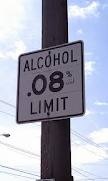 If you see blue lights come on behind your vehicle and it’s after midnight on about any day of the week, chances are the Officer stopping your vehicle is going to ask you if you have consumed any alcohol that evening. If he smells even the faintest odor of alcohol a Driving While Impaired investigation is almost certainly to follow. Hopefully after performing some routine field sobriety tests you will be allowed to get back in your vehicle and drive away, however, you may find yourself being placed in handcuffs and arrested.
 In a Catawba County home, deputies found a liquor still, 100 jars of “white lightning” moonshine, 40 firearms, 195 grams of marijuana, prescription drugs, and more than $13,000 in cash. The resident, Mr. Timothy Scott Fox, has been charged with possession with intent to sell and deliver marijuana, maintaining a dwelling for a controlled substance, possession and sale of non-tax paid alcohol, possession and sale of alcohol without a permit, and manufacturing liquor without a permit. Mr. Fox is now out on $15,000 bond.
 On August 19, 2011, Damien Echols, Jessie Misskeley, Jr. and Jason Baldwin changed their original 1993 not guilty pleas and a judge found that based on these new pleas, they have served their time, and they will be released but have a ten-year suspended sentence hanging over them once they are released. This legal maneuver, called an Alford Plea, allows these men to maintain their assertion that they are innocent but acknowledges that the state does have some evidence against them that could be the basis of a conviction.
 On August 5, 2011, five current and former New Orleans police officers were convicted by a federal jury of various charges related to the shooting deaths of two unarmed men on the Danziger Bridge amidst the chaos surrounding Hurricane Katrina. The five men had been charged with twenty-five counts including the following: civil rights violations, deprivation of civil rights, obstruction of justice, and false prosecution. Four officers were found guilty of the shootings, while the fifth was found guilty of orchestrating the cover-up. The only counts the jury did not convict the officers of were the murder charges.
 On August 1, 2011, a Catawba county judge granted Elisa Baker’s Motion to Change Venue. Ms. Baker’s motion to change the venue of the trial was based on the extensive media coverage this case has attracted. Her attorney, Scott Reilly, felt that Ms. Baker could not receive a fair trial in Catawba County because of the coverage. District Attorney Jay Gaither did not oppose Ms. Baker’s motion. Although he felt that Ms. Baker would have been able to receive a fair trial in Catawba County, he “trust[s] the jury system… wherever we go.”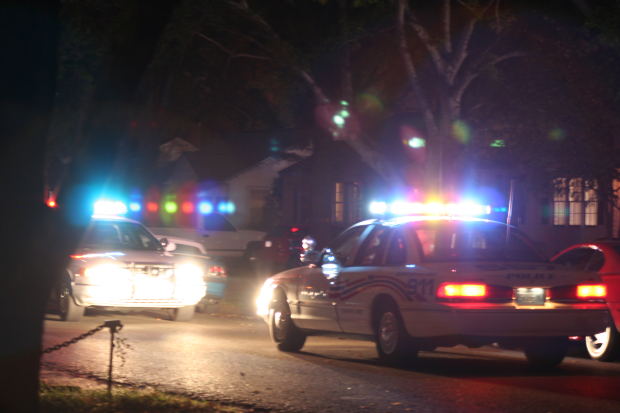
 On July 21, 2011, Lareko Williams was tased by police after they say he was found beating and choking a woman at a Lynx light rail station in Charlotte. An hour later, Mr. Williams was pronounced dead. This death comes one day after a Charlotte federal jury awarded the family of Darryl Wayne Turner $10 million for his death after being tased by the CMPD. CMPD has now suspended their use of tasers for up to 45 days in order to make sure its tasers are working properly and to independently test the taser that caused Mr. Williams’ death.
 Mecklenburg County defendants’ use of the “Moorish Nation” defense is interfering with District Attorney Andrew Murray’s new policy of taking more cases to trial. By invoking this “defense,” defendants force assistant district attorneys to deal with frivolous motions that delay the case. However, the real losers with this defense are those who try to use it, who, according to