 Charlotte Criminal Lawyer Blog


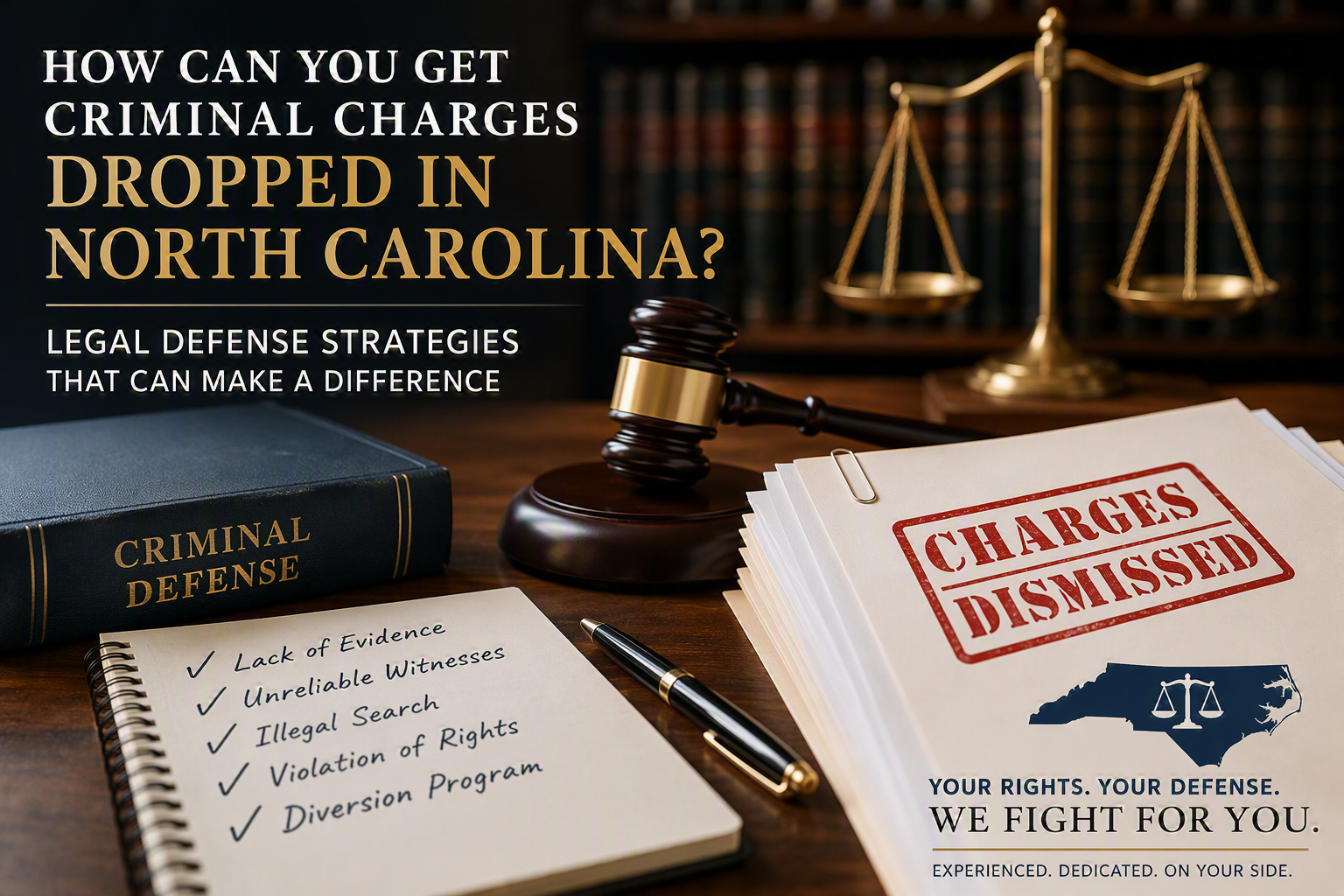 If you are facing criminal charges, you know that it can be a terrifying experience. The criminal justice system is complex, and throughout the process, you need to protect your rights. The prosecutor will review the details and evidence in the case to determine how to proceed. At the same time, your attorney will evaluate the information in the preparation of your defense. Sometimes, the state’s attorney may reduce or even drop some or all of the charges. Many people wonder how they can get the charges against them dropped in North Carolina.
Lack of Evidence
The prosecutor reviews the charges and evidence to determine whether the evidence is strong enough to obtain a conviction. Keep in mind that the prosecutor must be able to prove guilt beyond a reasonable doubt. They must prove every element of the charges using the evidence they have available. If there is not enough evidence or if some evidence is inadmissible, the prosecutor may decide not to move forward with the case.