 Charlotte Criminal Lawyer Blog


The nation is again discussing whether some educators are too quick to call in the police when a student gets a little unruly in the classroom. Every educator and parent around the country, including those in North Carolina, should be paying attention to the recent case where children are being handcuffed and charged with serious criminal offenses for acting out in class.
A 6-year-old Georgia girl sparked the national debate. 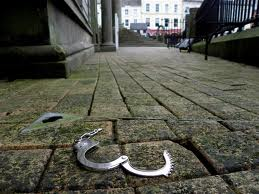 Earlier this month, the 6-year-old received media attention when it was reported that after she had a temper tantrum at school, the police were called and she was handcuffed. According to reports, the girl refused to comply with her teacher’s rules and began throwing things off of the teacher’s desk. She sent the student to the principal’s office where she continued her tantrum. The student threw things off of the principal’s desk and turned over a small shelf that fell on the principal’s leg. The principal tried to calm her down, but she resisted. At that point, it was decided that the police should be called. The Milledgeville Police Department responded and placed the 6-year-old in the back of a police car and transported her to the police station. Police procedure required that anyone placed in the back of the patrol car be handcuffed.
A similar incident happened in New Mexico. A 13-year-old girl’s teacher called the police after she refused to stop talking to her friend and move to another desk. This incident prompted a civil rights attorney to file a class action suit in New Mexico on behalf of several hundred public school children arrested for petty offenses, such as cell phone use and defacing a history book. While a police presence in the school is sometimes necessary, many believe that overwhelmed teachers are beginning to use them as first responders instead of as a last resort.
 The technology allows police to track not only the calls made by a cell phone user, but also the phone’s location, and by implication, the location of the cell phone’s user. The problem is that the police can obtain that information from the cell phone service provider without the knowledge or consent of the cell phone user. This lack of knowledge or consent prompted the ACLU to conduct a study of the process and procedures that law enforcement officials use to obtain cell phone records. The study revealed a disturbing trend.
 On Monday, January 30, 2012, arguments began in a Racial Justice Act case, a case in which a death row inmate is challenging his death sentence by attempting to demonstrate the presence of racial bias as a factor is his sentencing. According to a recent report by the
  In a story that hits close to home at
 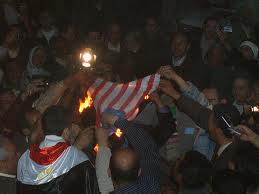 Four men have been charged with careless use of fire after a flag burning incident during an Occupy Charlotte protest. According to the
  According to the
  This month, on December 1, 2011, the North Carolina legislature passed the North Carolina Unborn Victims of Violence Act. WBTV reports that the new law will hold an individual criminally responsible for the death of an unborn baby which results from an attack on the mother. The law was sparked by the vicious murder of several pregnant women whose murderers were not ultimately held accountable for the death of the fetuses. According to an article in the Winston-Salem Journal, the law will be named after an unborn baby boy, Ethen, who died when his mother, Jenna Nielson, was murdered in 2007.
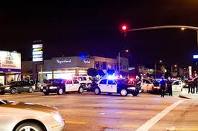 On August 5, 2011, five current and former New Orleans police officers were convicted by a federal jury of various charges related to the shooting deaths of two unarmed men on the Danziger Bridge amidst the chaos surrounding Hurricane Katrina. The five men had been charged with twenty-five counts including the following: civil rights violations, deprivation of civil rights, obstruction of justice, and false prosecution. Four officers were found guilty of the shootings, while the fifth was found guilty of orchestrating the cover-up. The only counts the jury did not convict the officers of were the murder charges.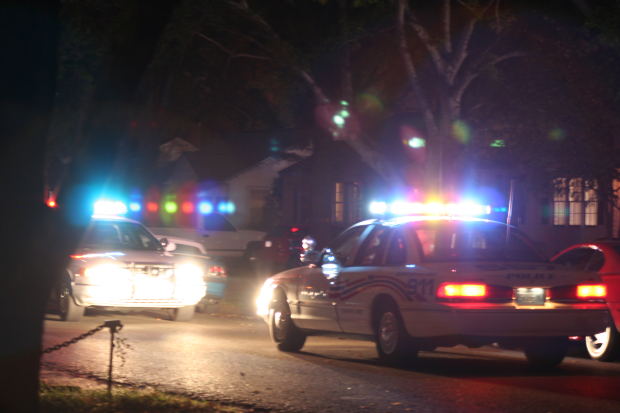
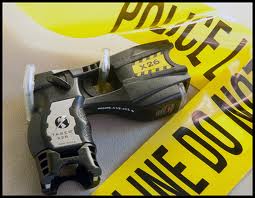 On July 21, 2011, Lareko Williams was tased by police after they say he was found beating and choking a woman at a Lynx light rail station in Charlotte. An hour later, Mr. Williams was pronounced dead. This death comes one day after a Charlotte federal jury awarded the family of Darryl Wayne Turner $10 million for his death after being tased by the CMPD. CMPD has now suspended their use of tasers for up to 45 days in order to make sure its tasers are working properly and to independently test the taser that caused Mr. Williams’ death.