 Charlotte Criminal Lawyer Blog


Attorney J. Bradley Smith answering the question: “Should I talk to the police?”
A recent editorial in the Winston-Salem Journal took the North Carolina Medical Examiner System to task for its many problems, making the important point that law enforcement cannot be fairly or judiciously run on the cheap. The editorial pointed out how state officials have for years pinched pennies on criminal investigations and how this has led to a host of problems.
 The first point made by the editorial board is that when criminal investigations are run cheaply it can mean unsolved or even undetected crimes. Every year cases go unsolved and still others go unnoticed by law enforcement officials. Though unsolved crime is certainly a problem, the real worry is that underfunded criminal investigations lead to accusations against innocent people, sometimes even convictions for those who never did anything wrong. The problem is a serious one with a recent investigation revealing that North Carolina seriously underfunds its criminal investigations. In fact, a recent study said that the state spends about 3/5th as much as the national average on its investigations, a glaring problem.
The condition of North Carolina’s medical examiner’s offices have been the subject of concern for some time, recently receiving a significant amount of attention after an Orange County pathologist was accused of mishandling bullets that were crucial pieces of evidence in two murder cases. Though no criminal charges have been filed against the pathologist, many experts say the case reveals the risks can occur when such an important element of the criminal justice system is underfunded.
For example, in the case of the Orange County pathologist it was discovered that the man was far too busy and was pulled in far too many directions to do his job as well as he needed to. Records have been released which reveal that he personally conducted 10 autopsies on Christmas Eve 2012. In 2010, he was responsible for conducting 440 autopsies.
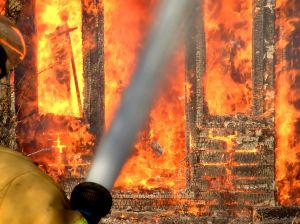 Authorities say that Cuthrell, minister of music at Gospel Shepherd Baptist Church, poured oil and gasoline across his rental home and set it on fire to avoid pressing financial obligations. At his sentencing, Cuthrell spoke out saying he was ashamed and embarrassed about his behavior, claiming that it was the most irrational decision of his life.
 The arrest took place this past weekend when 29-year-old Danny Hemby was arrested by officers with the NCWRC. Officials say that they have filed eight criminal charges against Hemby, including two counts of selling a reptile on the federal endangered species list; two counts of owning and using venomous reptiles; possession of a reptile of special concern; sale of a reptile of special concern; unlawful possession of a reptile without a permit and finally, commercial taking certain reptiles.
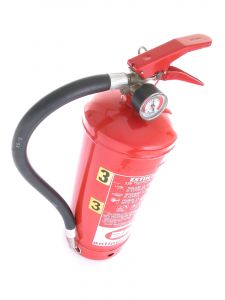 Police say that Pace forced his way in the museum through an exterior door. A fire alarm was then activated inside the Nature Research Center shortly after 3:30 in the morning. Security camera footage shows Pace, wearing a white jacket and dark clothing, using a nearby fire extinguisher to bust down the door to the museum.
 According to authorities, Bader was at her home late Monday night when her roommate and his brother were in the living room, drinking and watching a loop of classic rock songs by the Eagles on the television. Bader apparently grew weary of hearing “Hotel California” blasted over and over again and told the two men to turn off the music.
 Prior to passage of the law, students were only allowed to have an attorney informally advise them. Lawyers were generally barred from presenting evidence during the hearings, cross-examining witnesses or in any way representing the student during the disciplinary actions.
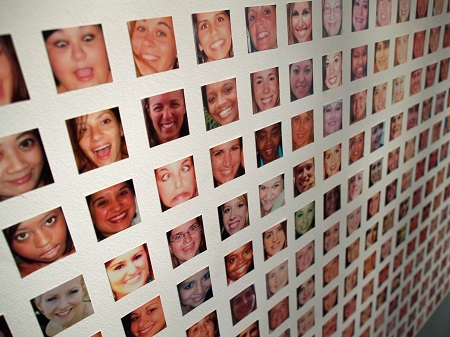 Experts say that detectives have begun cracking cases thanks to the technology that links mug shots with pictures pulled off of various social networking websites. Beyond just social networking sites, the facial recognition unit also combs pictures collected from a vast network of surveillance cameras.
 The Stand Your Ground law in Florida became a critical component of the recent trial of George Zimmerman who shot and killed Trayvon Martin in February of 2012. Zimmerman was charged with second-degree murder in the death of the teen, but argued that he acted in self-defense and should be exempt from prosecution under the state’s Stand Your Ground law. Since his acquittal, many have wondered whether similar arguments could be made if the incident had happened in North Carolina rather than Florida. Though the two states’ laws are not identical, they are very close and the result may have turned out much the same.
 The state Supreme Court issued a ruling on the matter this week and found that such lab tests can stand on their own if cited by an expert witness offering an independent opinion. Other have argued that this conclusion is incorrect and that a lab test should face the same amount of scrutiny that a person would face and that means the analyst who conducted the test should be required to testify at trial.
 Federal prosecutors say the leader of the fake prescription ring, Joshua Balkind, is already in prison serving a 20-year term. The other two participants were sentenced to 70 months in prison this Wednesday. Officials say the scheme worked by having Balkind make fake prescriptions using software on his home computer. He would then give the fake oxycodone prescriptions to drug addicts like Rhodes and DeYoung and essentially split the take, giving the addicts several pills and taking the rest to sell on the streets at a steep markup.