Charlotte DWI Lawyer Brad Smith answers the question: “If I simply intend to plead guilty, why do I need a lawyer?”
If you’ve already been convicted of a crime but are sitting in jail awaiting sentencing, criminal defense lawyers will normally advise you to stay on your best behavior. The lag time between conviction and sentencing leaves any jailhouse behavior subject to the sentencing judge’s scrutiny.
J. Bradley Smith of Arnold & Smith, PLLC answers the question “Do I need to hire an attorney if I have been falsely accused?”
Juries play an incredibly important role in our criminal justice system in determining the guilt or innocence of the accused. The topic of jury nullification is one of growing national debate. However, citizen, beware when it comes to spreading the word or even talking about practicing jury nullification anywhere near a courthouse. Courts vary in hostility towards the topic and doing so can have damaging consequences to the particular case and person. Where allowed, jury nullification allows a juror to vote Not Guilty according to conscience if they think there is enough evidence to convict a defendant but think that the sentence is in some way unfair or disproportionate, such as if:
J. Bradley Smith of Arnold & Smith, PLLC answers the question “Should I ever plead guilty to a charge?”
An exciting new ruling came out of the federal Fourth Circuit Court of Appeals this February. This is the federal court that has jurisdiction over North Carolina, and it held that a state court was objectively unreasonable in not finding that a defendant’s trial attorney provided Ineffective Assistance of Counsel when the attorney failed to move to suppress the defendant’s confession.
Charlotte Criminal Lawyer Brad Smith answers the question “If I have an outstanding warrant, what should I do?”
Given the current Powerball fever, it’s fitting that a former lottery winner in North Carolina is in the news. Conventional wisdom says that those who win the lotto eventually fritter the money away, buying new houses, cars, taking expensive vacations or giving money away as gifts to eager (or greedy) relatives. Marie Holmes, the North Carolina woman who won a $188 million Powerball drawing last February, has taken a different approach: spending a substantial amount of her new money paying to keep her boyfriend, Lamar “Hot Sauce” McDow, out of jail.
J. Bradley Smith of Arnold & Smith, PLLC answers the question: “I was found not guilty of a charge, why does my record still show the charge?”
The West Virginia Supreme Court recently issued an important decision that will help clear up questions regarding the rights of criminal defendants when it comes to making plea deals. Though the impact of the case is currently limited only to those defendants located in West Virginia, expert say that the case will likely have implications elsewhere given the strength and clarity of the decision.
Charlotte Criminal Lawyer Brad Smith of Arnold & Smith, PLLC answers the question: A past conviction is keeping me from finding work what can I do?
We’ve previously discussed the harms that can occur when children are charged with adult crimes and made to serve out punishment in adult prisons. Such heavy-handed tactics can prove counterproductive, creating young people who are far more likely to reoffend and live the life of a criminal rather than that of a productive member of society.
J. Bradley Smith of Arnold & Smith, PLLC answers the question “What is the difference between a misdemeanor and a felony?”
A criminal defense attorney was recently admonished by a District Court judge for seeking to have a motion heard.
“The District Attorney controls the docket,” the judge told the attorney, meaning that if the attorney wanted to have her motion heard, she would have to get the District Attorney to call the case.
Until about twenty years ago, prosecutors in North Carolina had the authority to set the criminal court calendar. Then, in the wake of a lawsuit brought against then-Durham County prosecutor James Hardin, Jr., Simeon v. Hardin, 451 S.E.2d 858 (N.C. 1994), the State legislature removed some prosecutorial authority in setting criminal calendars.
In the Simeon case, the complainants alleged that the district attorney held them in jail in an effort to coerce guilty pleas, listed cases on the court calendar even though he had no intention of calling them, and failed to call cases on agreed-upon dates, even though witnesses had flown in at considerable expense, according to a treatise on prosecutorial docket control published by Andrew Siegel in 2005. These tactics forced defense counsel to engage in “unnecessary and repetitive case preparation,” and—the complainants alleged in Simeon—the district attorney “used control of the docket to punish disfavored defense counsel and to extract pretrial punishment[.]”
J. Bradley Smith of Arnold & Smith, PLLC answers the question “What is the difference between a misdemeanor and a felony?”
Like other criminal defense attorneys, I would almost never recommend that a defendant waive one’s right to a jury trial.
Until last week, defendants in North Carolina could not be convicted of a felony but upon unanimous verdict of a jury of one’s peers. Now that right has been diluted, and criminal defendants have a new right: the right to waive their rights.
For the second time in two years, voters in the Tar Heel State have amended North Carolina’s State Constitution. Earlier this year, a pair of federal court judges struck down a 2012 state constitutional amendment banning same-sex marriage.
This time around, voters in the Old North State narrowly passed a state constitutional amendment that will enable defendants in criminal superior matters to waive jury trials.
Article I, Section 24 of the Constitution of North Carolina will now read:
J. Bradley Smith of Arnold & Smith, PLLC answers the question “Can I be arrested without evidence against me?”
Bill Stevenson became the latest North Carolina magistrate to resign his post in the wake of court rulings that paved the way for same-sex marriages to being in the Tar Heel State. The Gaston County magistrate—like at least six others in the state—cited religious objections to same-sex marriage as the reason for his resignation.
Magistrates, judges and clerks were warned by North Carolina’s Administrative Office of the Courts that if they refused to officiate same-sex weddings, they could be suspended, removed from office, or face criminal charges. Refusing to perform same-sex weddings, a memo warned, constituted a willful violation of a magistrate’s duty to uphold the Constitution of the United States.
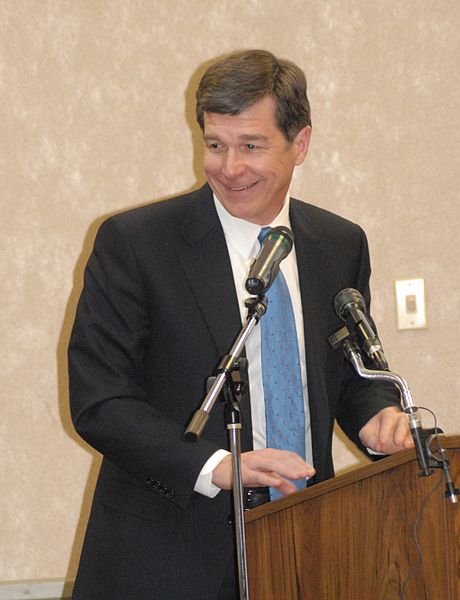
The magistrates may be wondering exactly who is bound by the law, since the state’s highest law-enforcement official—Attorney General Roy Cooper—announced in July that he would not defend North Carolina’s State Constitutional Amendment banning same-sex marriage. At the time, Cooper correctly predicted that the Amendment would be overturned, but it is undisputed that he instructed justice department attorneys to ignore then-existing law when he ordered them to “stop making arguments we will lose, and instead move forward.”
Cooper was not alone. At least seven other state attorneys general refused to enforce bans on same-sex marriage. In each case, the attorneys declared that state laws or state constitutional amendments banning same-sex marriage either violated the Constitution or created ethical conflicts for lawyers asked to defend the bans.
J. Bradley Smith of Arnold & Smith, PLLC answers the question “Should I ever plead guilty to a charge?”
In May 2012, Officer John Snyder pulled over 40-year-old David Khoury after he spotted the man driving erratically down a busy stretch of Torresdale Avenue in Holmesberg, Pennsylvania. When he approached the car, Snyder said, he spotted a gun lying on a floor mat. Khoury admitted he did not have a license to carry the unloaded Glock .40-caliber pistol. The Louisville, Kentucky native was booked on felony weapons charges and released on a $50,000 bond.
In 2010, an unnamed campaign donor gave $1,000 to the reelection campaign of Judge Joseph Waters, Jr. Judge Waters told the donor to get in touch with him if any of the donor’s “people” ran “into a problem.” After Khoury’s arrest, the donor called Waters and told him about Khoury’s felony weapon charge problem. Khoury, the donor said, was the cousin of a business associate.
Judge Waters determined that Khoury’s case was set to be heard by another Judge, Dawn Segal. He called Judge Segal and told her to help Khoury, identifying the man as a personal friend. Judge Segal reduced Khoury’s charge to a misdemeanor. When Khoury failed to appear for trial, the charge was dropped because court staff could not locate his address. Prosecutors and defense lawyers who worked on Khoury’s case could barely remember the man.
 Charlotte Criminal Lawyer Blog